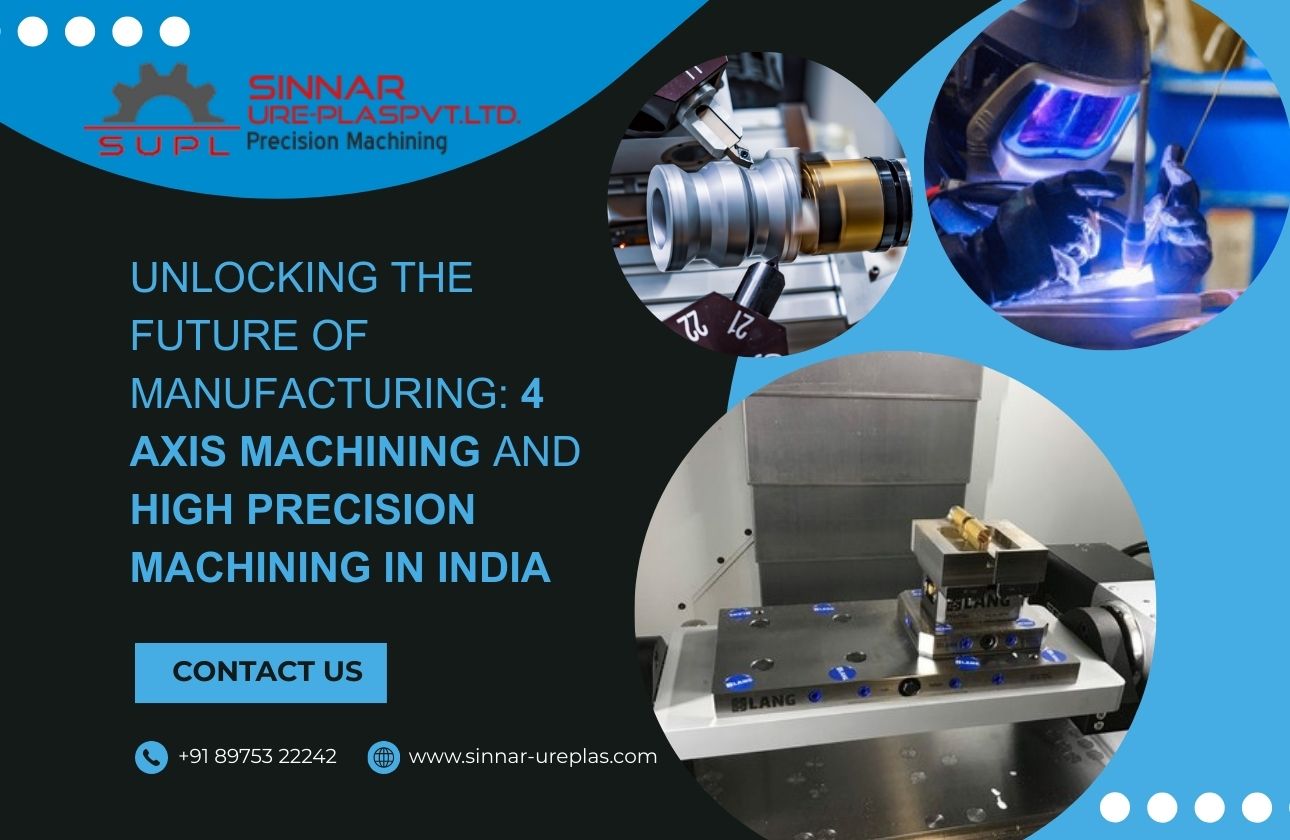
Unlocking the Future of Manufacturing: 4 Axis Machining and High Precision Machining in India
The Indian manufacturing sector is experiencing a transformative phase with the advent of advanced technological solutions. Among the forefront technologies are 4 axis machining, high precision machining, and laser cutting. These innovations are not only enhancing the quality of manufactured goods but are also allowing for greater design flexibility and operational efficiency.
The Role of 4 Axis Machining in Modern Manufacturing
4 axis machining is a step beyond the traditional three-axis process, adding a rotational movement around the X-axis. This additional degree of rotation allows for complex shapes and geometries to be formed with exceptional precision. industries ranging from aerospace to automotive are increasingly adopting this technology of 4 Axis Machining India to meet global standards and tight tolerances.
One of the major benefits is its ability to produce intricate details without the need for repositioning the workpiece. This reduces the risk of human error and enhances the speed of the production process. It's particularly advantageous in India’s thriving automotive sector, where manufacturers aim to deliver precise and reliable components.
High Precision Machining: Setting New Standards
High Precision Machining India is a critical aspect of modern engineering. This process ensures that components are fabricated with extreme accuracy, often within microns, making it indispensable for sectors that demand high reliability such as medical devices, electronics, and defense.
With India emerging as a global hub for manufacturing, companies are investing in state-of-the-art machinery and skill development to achieve high precision standards. This commitment not only enhances the quality of products but also boosts the competitiveness of Indian manufacturers on the international stage.
Laser Cutting: The Cutting-Edge Solution
Laser cutting stands out as a versatile and efficient manufacturing process, widely recognized for its precision and clean cuts. In India, the integration of laser cutting has revolutionized various industries including construction, electronics, and custom fabrications.
The primary advantage of it lies in its ability to cut a diverse range of materials while maintaining superior edge quality. Unlike traditional cutting methods, it minimizes material wastage and reduces the need for finishing processes, resulting in cost savings and increased productivity.
Conclusion
As India continues to embrace these advanced machining technologies, the country is setting new benchmarks in manufacturing quality and efficiency. The synergy of 4 axis machining, high precision machining, and laser cutting is not only driving innovation but also positioning India as a leader in global manufacturing.
For businesses looking to leverage cutting-edge manufacturing processes, tapping into India’s expanding capabilities offers a promising avenue toward achieving excellence and sustainability in production.
Published on January 15, 2026 by Admin