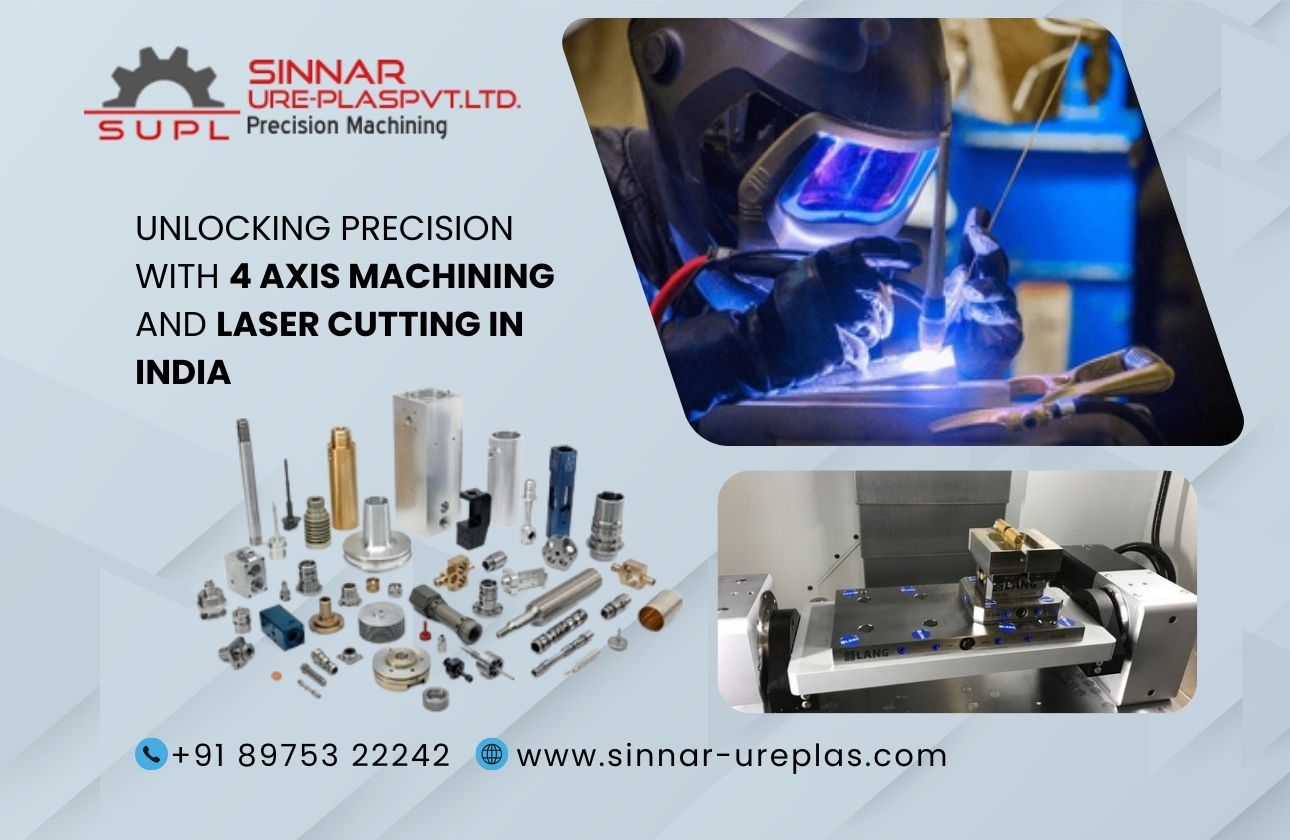
The Evolution of Machined Components in India
India has witnessed remarkable growth in its manufacturing sector, with machined components playing a vital role. The demand for precision-engineered parts is increasing across various industries, including aerospace, automotive, and healthcare. As a result, techniques like 4 Axis Machining India and Laser Cutting are becoming prominent to meet these precise requirements.
What is 4 Axis Machining?
4 Axis Machining extends the capabilities of the traditional 3-axis machining process by adding an additional rotational axis. This allows for more complex and intricate part geometries that are otherwise difficult to achieve. In India, companies utilizing 4 axis CNC machines can produce parts with enhanced precision and efficiency, reducing the need for multiple setups and promoting faster production cycles.
Benefits of 4 Axis Machining in India
One of the key benefits is improved cutting quality and accuracy. With the ability to approach objects from different angles, 4 axis machining in India enables manufacturers to achieve tighter tolerances and exceptional surface finishes. Additionally, it offers:
- Increased flexibility in manufacturing processes, allowing for custom and intricate designs.
- Cost-effectiveness due to reduced labor and material handling times.
- Higher throughput as complex operations are completed in fewer steps.
Laser Cutting: Advancing Precision in Manufacturing
Laser Cutting is another technique gaining popularity in the Indian manufacturing landscape. It uses a focused laser beam to cut materials, offering a non-contact method that minimizes material waste and enhances the precision of cut components. Industries across India are adopting laser cutting for its speed, flexibility, and superior finish.
Advantages of Laser Cutting for Machined Components in India
The primary advantage Machined Components India is the ability to cut complex shapes with high precision and minimal distortion. Additionally, laser cutting is suitable for a wide range of materials, including metal, plastic, and glass, allowing for versatile application across different industries. Further benefits include:
- Reduced setup time as there's no need for custom tools or molds.
- Enhanced safety since the process is automated and requires minimal human intervention.
- Reduced environmental impact due to less waste and efficient resource usage.
The Future of Manufacturing in India
With the integration of advanced techniques like 4 Axis Machining and Laser Cutting, the future of manufacturing in India looks promising. These technologies not only boost productivity and precision but also position India as a competitive player on the global stage for machined components. Companies in India that embrace these advancements are set to lead the way, providing high-quality solutions tailored to the evolving needs of their clients.
Conclusion
The adoption of 4 Axis Machining India and Laser Cutting is transforming how machined components are produced in India. By leveraging these technologies, manufacturers are capable of delivering superior products that meet international standards. As demand for highly precise components continues to rise, the Indian manufacturing sector is poised to adopt innovative solutions that enhance competitiveness and quality.
Published on November 17, 2025 by Admin