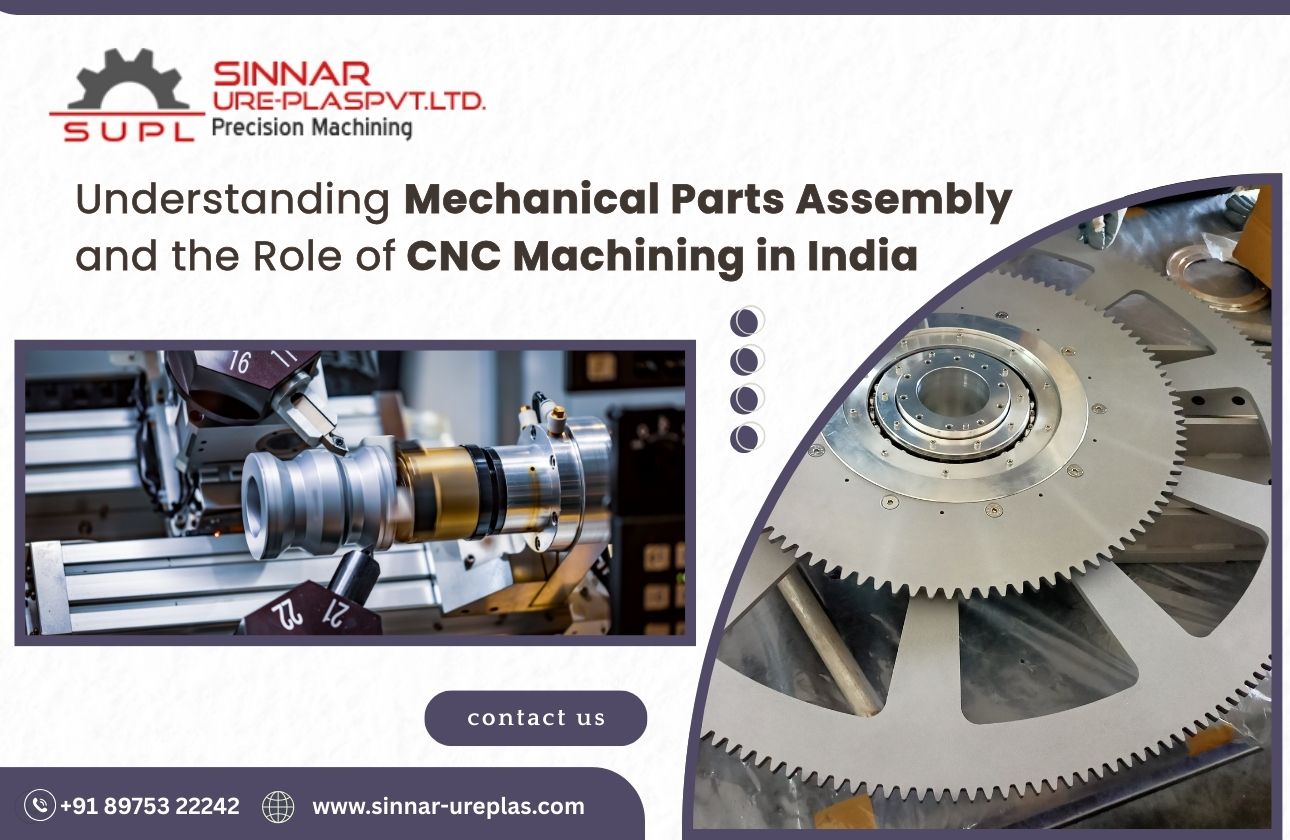
Introduction to Mechanical Parts Assembly
Mechanical parts assembly is a crucial process in manufacturing that involves the precise arrangement and joining of components to produce a final product. It's a field that demands accuracy and efficiency, vital for sectors such as automotive, aerospace, and consumer electronics. With advancements in technology, the integration of automated tools and methodologies has significantly enhanced the capability and reliability of production lines.
This article delves into the core aspects of mechanical parts assembly and highlights the significant contributions of CNC machining, especially within the context of India's burgeoning manufacturing scene.
The Process of Mechanical Parts Assembly
Mechanical parts assembly encompasses various techniques and tools tailored to specific manufacturing needs. The process typically involves:
- Design and Planning: This initial stage includes creating detailed schematics and selecting appropriate materials.
- Component Fabrication: Individual parts are manufactured, often using CNC machining techniques.
- Assembly Line Setup: Arrangement of workstations and tools to streamline the assembly process.
- Quality Control: Rigorous testing to ensure each part meets specified standards.
The Impact of CNC Milling Suppliers
Precision is key in manufacturing, and CNC milling suppliers play an indispensable role. These suppliers provide the sophisticated milling machines that perform precise cuts on raw materials, forming intricately shaped components essential for mechanical parts assembly.
CNC (Computer Numerical Control) milling involves using programmed computer software to automate control of machining tools. It's renowned for its versatility and precision, enabling the production of complex parts with exceptional accuracy. Top-tier CNC milling suppliers provide these tools, ensuring they are well-maintained and up-to-date with the latest technological advancements.
CNC Machining: A Cornerstone in Indian Manufacturing
Over recent years, CNC machining India has seen substantial growth, earning its place as a cornerstone of the nation's manufacturing industry. The integration of CNC technology has bolstered local manufacturing capabilities, offering global competitive pricing and outstanding quality.
India's focus on developing infrastructure, coupled with government initiatives like 'Make in India', has encouraged investment in advanced manufacturing technologies, including CNC machining. This has propelled Indian industries to the forefront of high-quality and cost-effective production solutions.
Advantages of CNC Machining in India
Indian CNC machining facilities offer several advantages, including:
- Cost Efficiency: Lower operating costs in India contribute to more affordable production solutions.
- Skilled Workforce: Access to a vast pool of skilled professionals adept in modern manufacturing techniques.
- Technological Advancements: Continuous investment in state-of-the-art machinery and software.
Conclusion
As the demand for high-quality products continues to rise, the importance of efficient and precise mechanical parts assembly cannot be overstated. CNC machining India, plays a pivotal role in meeting this demand, offering unmatched precision, flexibility, and cost-efficiency.
For industries looking to optimize their assembly processes, embracing CNC machining technologies and partnering with reliable CNC milling suppliers is a strategic move that can lead to significant improvements in both product quality and production costs.
Published on November 3, 2025 by Admin