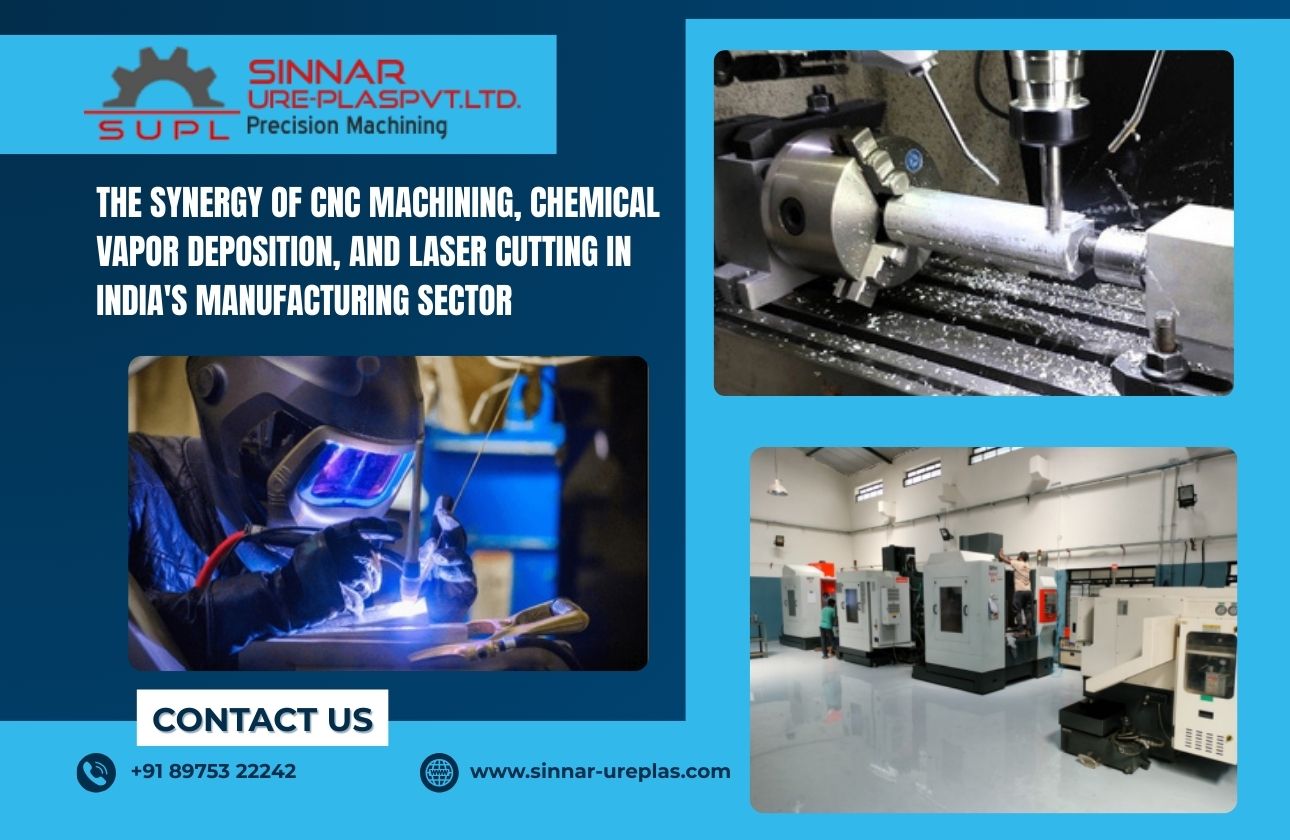
The Synergy of CNC Machining, Chemical Vapor Deposition, and Laser Cutting in India's Manufacturing Sector
India's industrial landscape has been rapidly evolving, buoyed by cutting-edge technologies like CNC machining, chemical vapor deposition, and laser cutting parts. These technologies are not only making the manufacturing process more efficient but also propelling the nation's industry towards a more innovative and sustainable future. This blog explores the intricate synergy between these advanced manufacturing techniques.
Unveiling CNC Machining's Role in India
CNC (Computer Numerical Control) machining has revolutionized the precision and efficiency of manufacturing processes in India. Utilizing computerized controls and machinery, CNC Machining India allows for the exact production of complex parts critical in sectors ranging from automotive to aerospace. Indian manufacturers have increasingly adopted these sophisticated technologies to enhance product quality while reducing lead time and waste.
The growth trajectory of CNC machining in India is impressive. With a focus on quality and precision, many Indian companies have started exporting high-demand components globally, which underscores the capability and competitiveness of Indian manufacturers in the global arena.
Chemical Vapor Deposition: A Boon for Indian Manufacturers
Chemical vapor deposition (CVD) is another pivotal innovation in India's manufacturing sector. As a process that allows for the creation of high-performance materials and coatings, CVD is essential for industries that demand advanced material properties, such as electronics, optics, and lighting.
India hosts numerous chemical vapor deposition manufacturers who are at the forefront of material innovation. By offering enhanced wear resistance, high-temperature endurance, and reduced friction surfaces, CVD ensures that components meet the stringent requirements of today's technology-driven markets.
Advancements in Laser Cutting Parts
The precision and versatility of laser cutting technology have made it a cornerstone of modern manufacturing. In India, laser cutting parts has found extensive applications across various industries, including metal fabrication, automotive, aerospace, and even jewelry.
Indian manufacturers are leveraging laser cutting technology to produce intricate parts with unmatched precision. This process allows for the creation of complex shapes and designs, reducing the need for additional processing and minimizing material waste, crucial for both cost efficiency and environmental sustainability.
The Triumvirate of Innovation
Combining CNC machining, chemical vapor deposition, and laser cutting is creating a formidable trifecta in India’s manufacturing landscape. Each technology complements the other by bringing unique advantages to the table. CNC machining's precision, CVD's superior material properties, and laser cutting's detailed designs create products that meet and often exceed international standards.
Furthermore, the integration of these technologies has a ripple effect, enhancing the skills of the workforce and driving demand for technically proficient professionals in the manufacturing sector. This approach aligns with India's ambition to become a global manufacturing hub and supports the 'Make in India' initiative.
The Future Outlook
The future of the Indian manufacturing industry looks promising as companies continue to adopt and innovate with technologies like CNC Machining India, chemical vapor deposition, and laser cutting. By fostering investment in these technologies, India can enhance its competitiveness on the global stage, reduce dependence on imports, and boost exports.
As the manufacturing ecosystem evolves, the synergistic relationship between these technologies will undoubtedly be a central pillar, driving India towards an era of advanced manufacturing excellence. Keeping pace with global innovations, Indian manufacturers like Chemical Vapor Deposition Manufacturers can aspire to not only meet but set international standards, carving out a distinct niche in the global marketplace.
The convergence of these technologies will continue to contribute significantly to India's economic growth, employment, and technological advancement, heralding a new chapter for the nation's manufacturing sector.
Published on December 6, 2025 by Admin