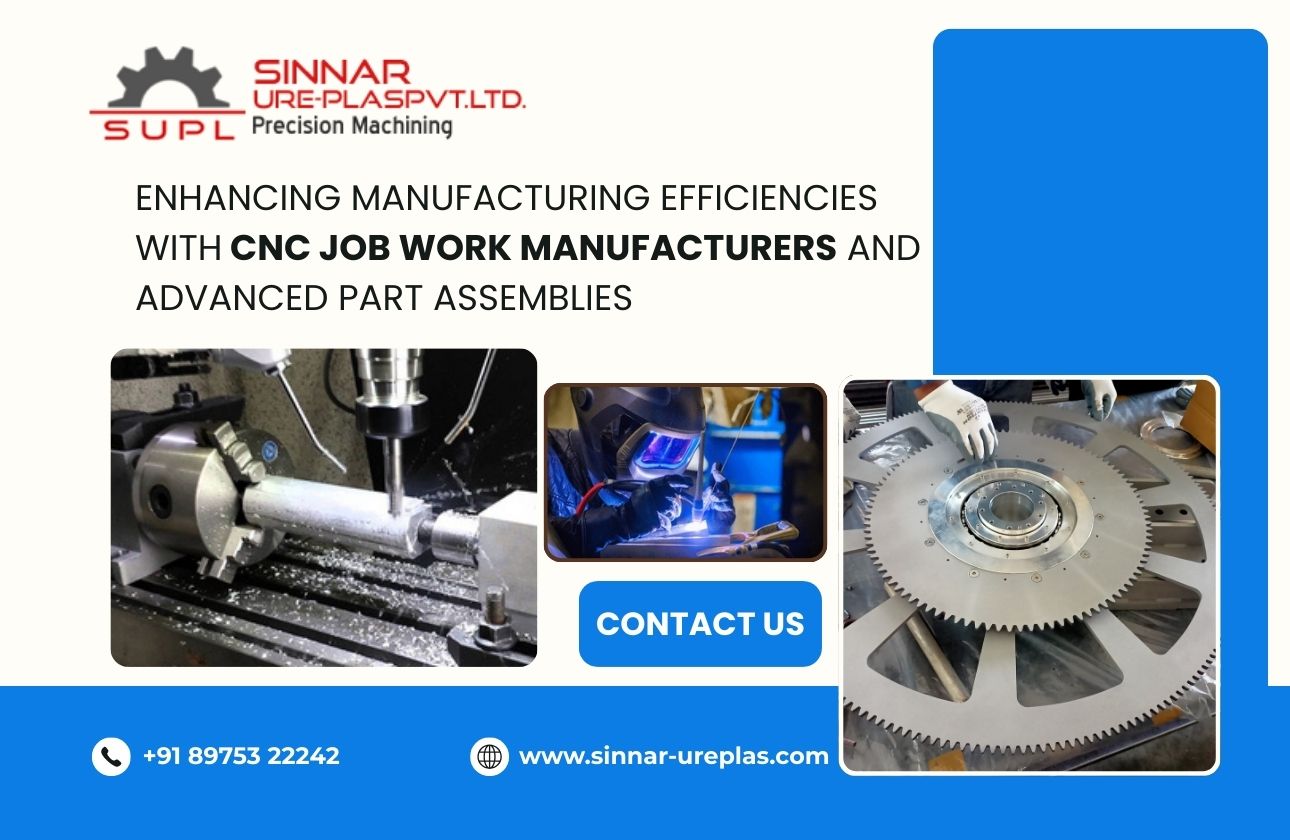
An Overview of CNC Job Work Manufacturers
The manufacturing industry has long been a cornerstone of global economic development, and CNC job work manufacturers play a critical role in this sector. They are responsible for producing highly precise and complex components that are integral to a wide range of industries such as automotive, aerospace, and consumer goods.
The Role of CNC Technology
Computer Numerical Control (CNC) technology involves the use of computers to manage machine tools. The precision it offers allows manufacturers to create parts that meet exact specifications, improving product quality and reducing waste. CNC job work manufacturers leverage these capabilities to provide customized solutions tailored to specific client needs.
Innovations in Mechanical Parts Assembly
As technology advances, the assembly of mechanical parts continues to evolve, driving efficiency improvements and cost reductions. Mechanical parts assembly involves combining various components into a single functional unit. Innovations in this area have led to smarter, more integrated assembly lines that are capable of adapting to complex production demands.
Automation and Robotics
One of the significant advancements in this field involves the use of automation and robotics. These technologies not only reduce human error but also increase production speed and consistency. By integrating AI and machine learning, manufacturers can further enhance their production capabilities.
Laser Cutting Parts: Precision and Efficiency
In addition to CNC and mechanical assemblies, laser cutting parts is a growing trend in manufacturing. Laser cutting technologies offer unparalleled precision and speed, making them ideal for intricate designs and complex materials. This process is widely used in industries requiring high precision, such as electronics and automotive manufacturing.
Advantages of Laser Cutting
The primary advantages of laser cutting include its ability to provide clean and precise cuts with minimal material waste, resulting in cost savings. Moreover, laser cutting can be used on a wide range of materials including metals, plastics, and composites, providing versatility for manufacturers.
Future Trends in Manufacturing
Looking ahead, the integration of CNC technology, mechanical parts assembly, and laser cutting parts is set to drive further innovations. Expect advancements in connectivity, with IoT and data analytics playing bigger roles in optimizing manufacturing processes. Augmented reality and virtual reality might also be used for more sophisticated design and assembly operations.
In conclusion, the synergy of CNC job work manufacturers, mechanical parts assembly, and laser cutting parts is paving the way for a more efficient, precise, and responsive manufacturing industry. Businesses that embrace these technologies today will likely lead the way in tomorrow’s industrial landscape.
Published on December 23, 2025 by Admin